Time and Ian McEwan
And what happens when you open the mystery box

It is 2007. I have absolutely no context for the film I am about to see. My friend has somehow ended up with advance tickets to a preview screening at a luxurious inner-city cinema. Within six months, the cinema itself will have disappeared. Out of business.
For now, I take refuge in the air-conditioned darkness and watch Atonement.
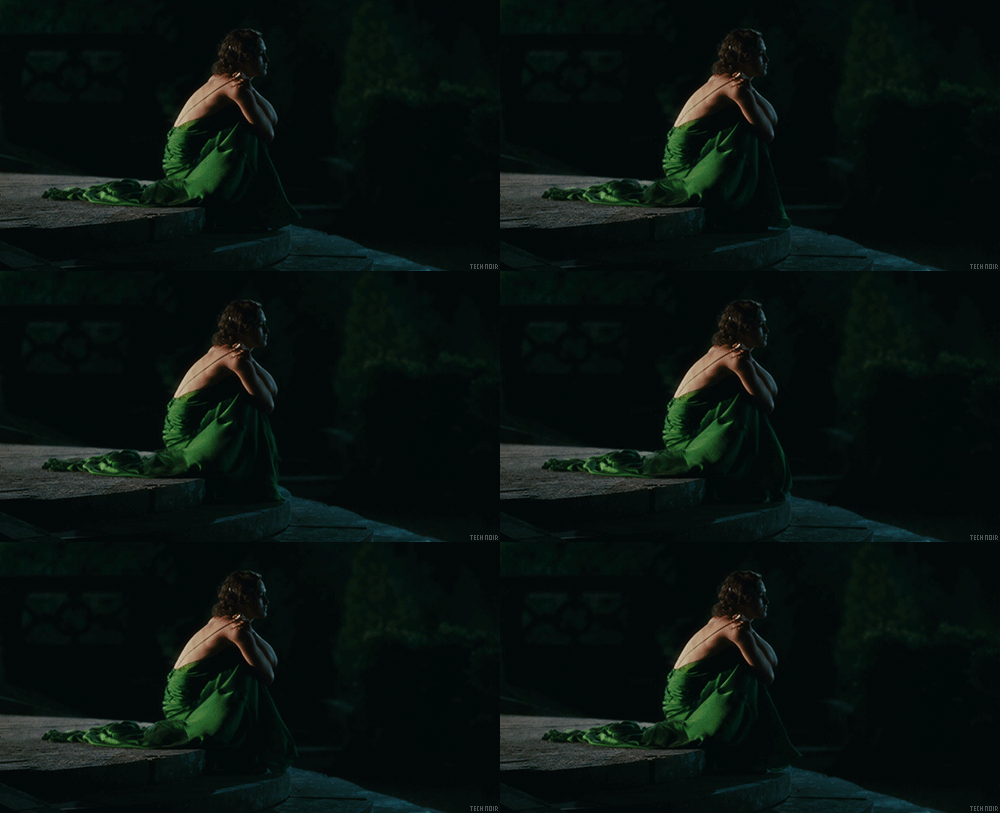
Firstly, the score is incredible. Secondly, the film’s narrative changes dramatically mid-stream - not once, but twice. I am a twenty-something nerd, used to the facile blockbuster rhythms of the hero’s journey. Atonement lunges from a romantic period drama, into a tragic war movie, and then, in the most surprising twist, leaps into the present-day, where one of the main characters, now elderly, speaks directly to the camera in a monologue that repositions everything the audience has seen so far.
I enjoy the film, and I am bewitched by it. I also find the ending pleasingly unsatisfying.
I have just been introduced to the writing of Ian McEwan - a writer obsessed with time, storytelling, and perception.
McEwan’s genius is consistent, but nothing quite touched the narrative of Atonement until last year’s release: What We Can Know. Again, McEwan stretches the limits of the novel form. Much like Atonement, the final act of the story is a stylistic departure from everything that’s been laid before. It is daring - and even months after finishing, I’m not sure if it’s any good. The first two-thirds of What We Can Know are among the best readings I enjoyed in 2025. The final third - where McEwan can’t resist but twist and turn - dilutes its grandeur, but I’m not so certain this wasn’t his precise intention to begin with.
2119. A little under a year in the future, a scholar is attempting to unearth a literary mystery from 2014 - all while navigating a United Kingdom crippled by a climate apocalypse. The scholar is obsessed with this era of history:
“I prefer teaching the post-2015 period, when social media were beginning to be drawn into the currency of private lives, when waves of fantastical or malevolent or silly rumours began to shape the nature not only of politics but of human understanding. Fascinating! It was as if credulous medieval masses had burst through into modernity, rushing into the wrong theatre and onto the wrong stage set. In the stampede, grisly government secrets were spilled, childhoods despoiled, honourable reputations trampled down and loud-mouthed fools elevated.”
McEwan disguises himself in this character so convincingly that the satire is almost invisible on first reading. While she is fascinated by our generation, her students see us as dull and unenlightened (as late teenagers would generally regard the generations before them):
“Those ancients were ignorant, squalid and destructive louts. As one of the brighter students pointed out, surely they could have done something other than grow their economies and wage wars.”
“They were big and brave, superb scholars and scientists, musicians, actors and athletes, and they were idiots who were throwing it all away, even as their high culture lamented or roared in pain.”
Fair.
Our scholar is unusually blessed - her time period of study is the most documented in all of human history:
“I’d like to shout down through a hole in the ceiling of time and advise the people of a hundred years ago: If you want your secrets kept, whisper them into the ear of your dearest, most trusted friend. Do not trust the keyboard and screen. If you do, we’ll know everything.”
And this, more than anything, is the theme of the book - what is known, what is unknown. What can never cross the bridge between the two?
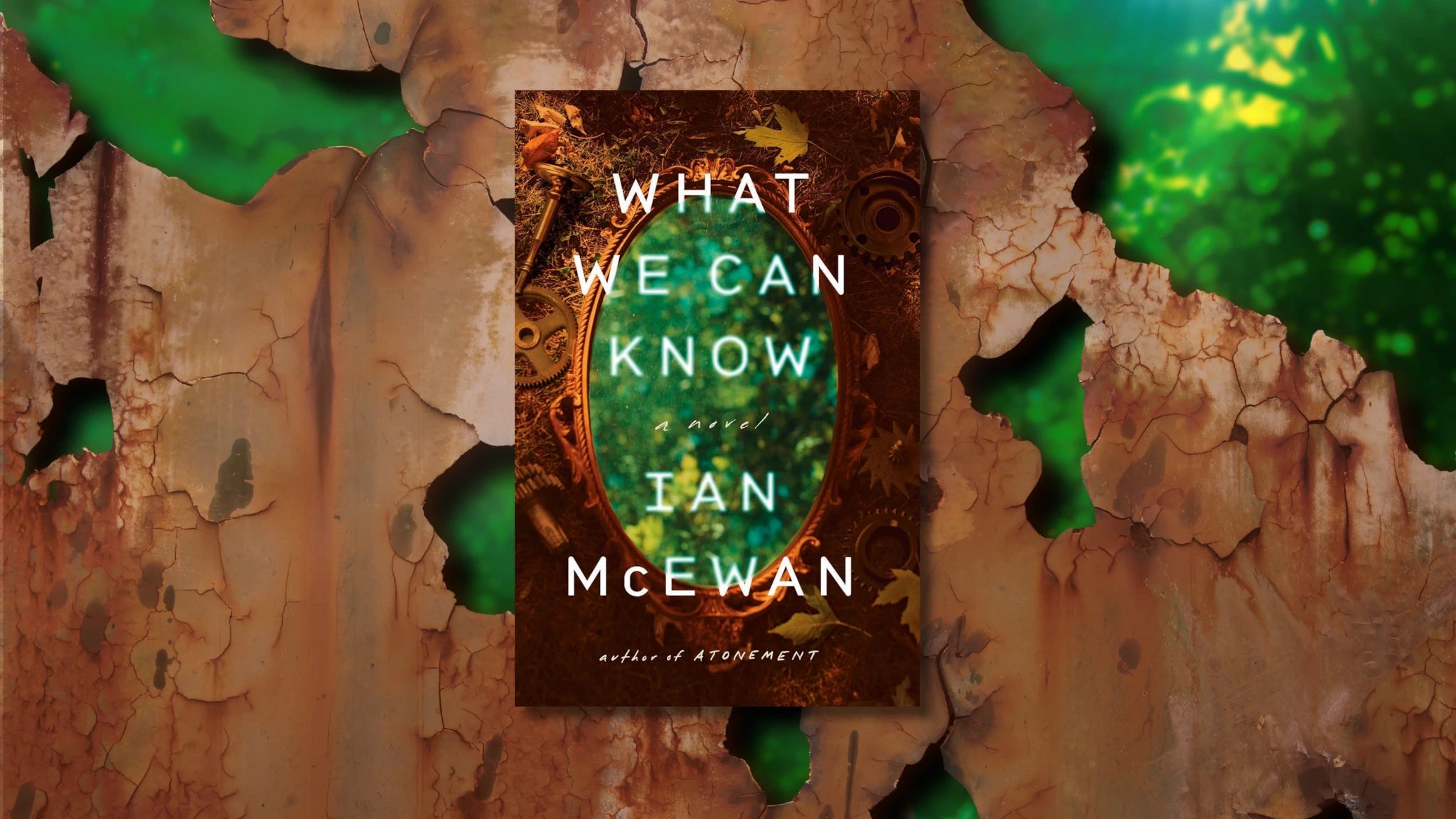
2014: A well-regarded poet gathers his wife and friends for dinner and recites a new poem. He is incredibly proud of it - he writes about it extensively. He feels it is his best work.
After that evening, it is completely lost to history.
Our scholar in 2119 can summon everything about that evening - the food, the intimate thoughts and feelings of each participant - except the poem itself. This is the central mystery at the ‘plot’ of the novel. Can our protagonist uncover the poem and figure out why it was hidden for so long?
While stumbling along, our scholar protagonist mourns the beautiful, generous world of 2014. People travelled on planes. Books were printed on real-life paper. The humble fare prepared at the 2014 dinner party is outrageously luxurious in 2119: fresh vegetables sautéed in real butter, and fresh fish grilled and dressed with lemon and oil.
And yet somethings never changed. The poet was underestimated in his time, and our scholar feels just as tired of university under-funding as him:
“The humanities are always in crisis. I no longer believe this is an institutional matter – it’s in the nature of intellectual life, or of thought itself. Thinking is always in crisis.”
It is 2008. In real life, J. J. Abrams - co-creator of Lost and future screenwriter, inheritor of Star Trek and Star Wars- delivers a TED Talk simply called ‘The Mystery Box’, in which he outlines his approach to storytelling. There is a beautiful and enduring appeal of mystery:
"The beauty of working with mystery is that it's like a blank canvas. You have the opportunity to create something truly unexpected and exciting."
It is an approach he mastered in Lost. It served him well when he worked with Doug Dorst on S., a 2013 book that hits some of the same notes that McEwan plays with in What We Can Know. S. - a beautiful book that I urge any serious reader to own - is a novel, but it is printed with additional notes in the margins from generations of readers, so that there is a mystery in the novel, but there are layers of meta-textual mystery in the margins also. A seriously committed reader could puzzle it all out to arrive at ‘answers’ - but I always found the most pleasurable way to read the book was simply to be immersed in the grand mystery of it all.
For this is what Abrams also learned. In the final seasons of Lost, answers have to be provided. The opening gestures of his Star Wars trilogy ultimately have to be resolved and answered at the trilogy’s conclusion. The endings to Abrams’ projects are almost universally disastrous. But the ride is so pleasurable.
It is 2025. It is a hot Summer, in the days leading up to Christmas, and I am compulsively reading What We Can Know by Ian McEwan. At the two-thirds mark, our scholar protagonist conveniently finds a long-buried journal from one of the original attendees of the 2014 dinner party.
McEwan abandons the form he has built so far. The remainder of that book is the journal, where gaps are filled in and given shape, and everything is resolved. McEwan couldn’t resist - having opened the box - to then see what was inside. Much like Atonement, there’s a certain masterful, destructive glee in bringing everything to a not-quite-satisfying conclusion.
And maybe that is McEwan’s final, mischievous provocation. Not that stories should refuse meaning, but that they should resist completion. That there is something ethically alive in the gaps - in the poem we never hear, the lovers we cannot save, the past we can document but never truly recover. To open the box is irresistible; to leave it closed requires discipline. McEwan knows this. He opens it anyway. And like Atonement, like Lost, like history itself, What We Can Know leaves us with the uneasy suspicion that the mystery was doing more work than the answer ever could.